By Dog Type
Raw Dog Food for Nursing Dogs Edmonton
Jun 16, 2025
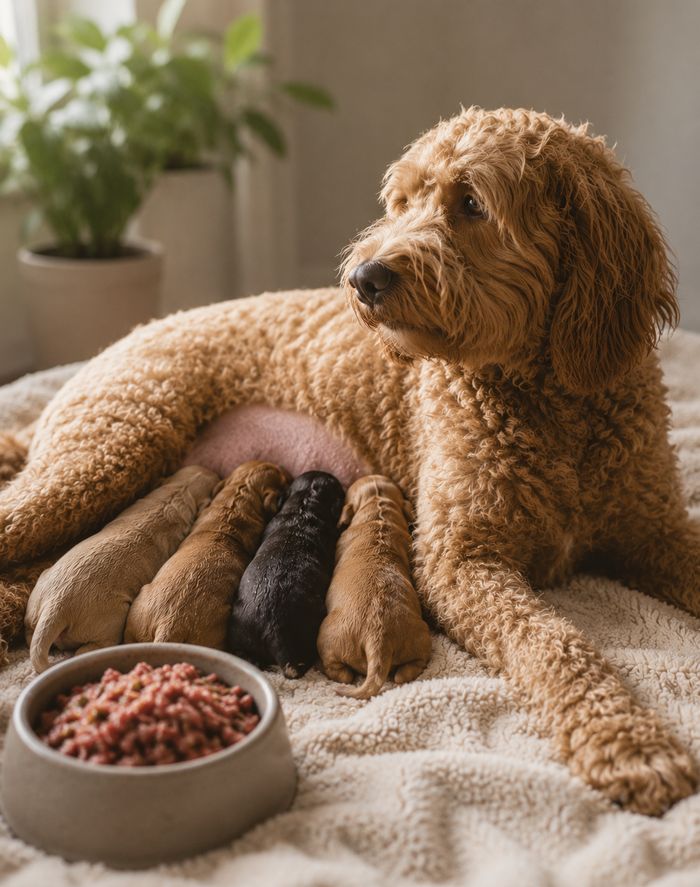
Nursing dogs have extremely high caloric needs. Here is what Edmonton dog owners should know about feeding a raw diet during lactation and when to consult a vet.
Nursing dogs have some of the highest caloric demands of any life stage, and managing their diet during lactation requires close attention. Here is what Edmonton dog owners should know.
The Nutritional Demands of Lactation
A nursing dog producing milk for a litter of puppies requires significantly more calories than she does at maintenance. The exact amount depends on the size of the litter, but it is not unusual for a nursing dog to require two to four times her normal food intake, particularly in the first few weeks after whelping when milk production is at its peak.
Underfeeding a nursing dog affects milk production and her own body condition. Ensuring she has access to enough food during this period is one of the most important things you can do for both the mother and the puppies.
Feeding Approach During Lactation
Many experienced breeders who raw feed their dogs allow nursing mothers to eat as much as they want during lactation rather than restricting to fixed portions. This ad libitum approach lets the dog's appetite guide intake during a period when her needs are difficult to estimate precisely.
Fresh water should always be available in abundance, as hydration is essential for milk production.
Working with Your Veterinarian
A nursing dog is not the time for dietary experimentation. If you are planning to raw feed a dog through pregnancy and lactation, discussing the plan with your veterinarian in advance is strongly recommended. They can help you assess whether the specific diet you are feeding meets the elevated demands of this life stage and flag any adjustments that may be needed.
Food Safety During Lactation
The food safety practices that apply to all raw feeding are particularly important for nursing dogs. Thaw food in the refrigerator, keep surfaces and bowls clean, and never leave food sitting at room temperature for extended periods.
This article is for general information only and is not veterinary advice. Every dog is different — consult your veterinarian before making changes to your dog’s diet. Individual results may vary.