
By Dog Type
Raw Dog Food for Dogs with Sensitive Stomachs Edmonton
Jun 2, 2025
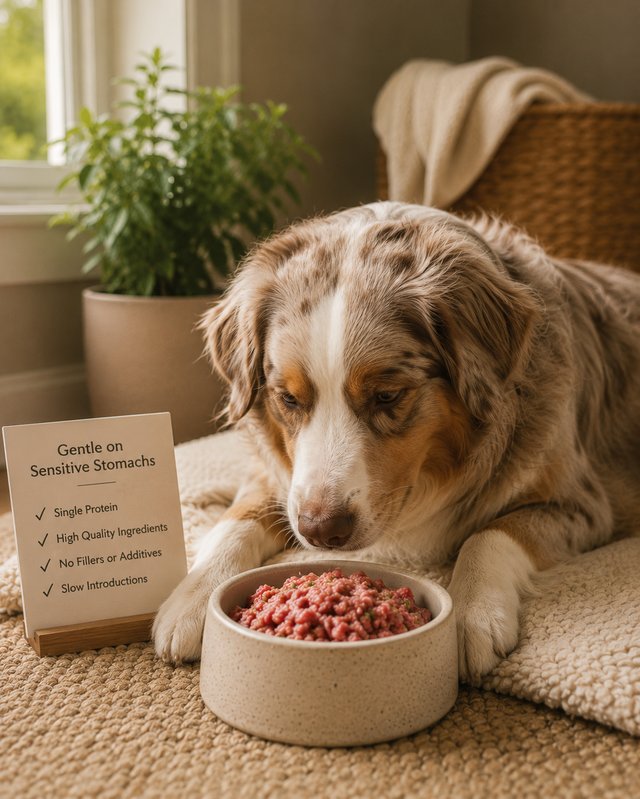
Dogs with sensitive stomachs need a careful approach to raw feeding. Here is how Edmonton dog owners can choose the right protein and transition gradually.
Dogs with sensitive stomachs require a careful approach to diet, and raw feeding is something many owners of these dogs explore. Here is what to know before making the switch.
What Causes a Sensitive Stomach in Dogs?
Digestive sensitivity in dogs can have several causes: food intolerances, reactions to specific ingredients in commercial pet food, stress-related digestive upset, or underlying health conditions. Before making significant dietary changes for a dog with digestive issues, a veterinary assessment is a valuable first step to rule out any underlying causes that need medical attention.
How Raw Feeding May Help
For dogs whose digestive sensitivity is related to specific ingredients in commercial pet food, such as artificial additives, fillers, or particular protein sources, a simple single-protein raw diet with a short ingredient list can make it much easier to identify and avoid the problematic ingredients.
The absence of the common fillers, artificial preservatives, and highly processed components found in many commercial foods is one reason some owners of sensitive dogs find raw feeding beneficial.
Choosing the Right Starting Protein
For dogs with sensitive stomachs, starting with the simplest possible raw formula is the most cautious approach. A single-protein blend with a short, recognizable ingredient list gives you the clearest baseline for understanding how your dog responds.
Chicken and turkey are often recommended as starting proteins for sensitive dogs because they are lean and generally well-tolerated. If your dog has a known sensitivity to poultry, consider a novel protein like pork or bison instead.
Transitioning Slowly
The transition to raw should be particularly gradual for sensitive dogs. A slower four to six week transition, rather than the standard two to four weeks, gives the digestive system more time to adjust.
Any significant or prolonged digestive upset during the transition is worth discussing with your veterinarian.
This article is for general information only and is not veterinary advice. Every dog is different — consult your veterinarian before making changes to your dog’s diet. Individual results may vary.