
Storage and Safety
Raw Dog Food Storage Containers
Apr 28, 2025
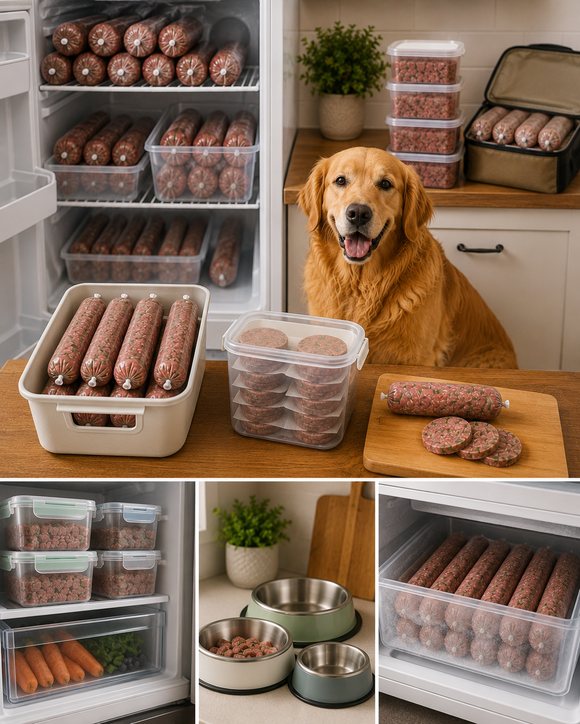
The right storage setup makes raw feeding easier. Here is what Edmonton raw feeders use for freezer storage, fridge containers, and feeding bowls.
Having the right storage setup makes raw feeding more convenient and helps maintain food quality. Here is what Edmonton raw feeders typically use for storing raw dog food.
Freezer Storage
The primary storage requirement for raw dog food is a freezer. Most raw feeders keep their supply in either a standard upright freezer, a chest freezer, or a combination of the two.
A chest freezer is the most popular choice for committed raw feeders who buy in bulk. Chest freezers are generally more energy-efficient than upright models, maintain temperature more consistently when opened frequently, and offer better use of vertical storage space for stacking boxes and tubes.
A standard upright freezer or the freezer compartment of a refrigerator works for owners who buy smaller quantities more frequently or who have smaller dogs that go through food slowly.
Hound and Bone products come in 1LB sealed tubes that stack efficiently in any freezer format.
Fridge Storage for Thawed Food
Once thawed, raw dog food should be kept in a sealed container in the refrigerator until it is served. Options include:
Glass or stainless steel containers with tight-fitting lids. These are easy to clean, do not absorb odours, and are durable.
BPA-free plastic containers with secure lids. More lightweight than glass and practical for everyday use.
The original tube, if only partially used, can be stored in the fridge with the open end covered or transferred to a container.
Bowls and Feeding Surfaces
A stainless steel or ceramic feeding bowl is the easiest to clean thoroughly after each meal. Avoid porous materials that can harbour bacteria. Wash the bowl with hot soapy water after every feeding.
Keeping Things Simple
You do not need specialist equipment to raw feed successfully. A reliable freezer with enough space for your order, a few sealed containers for the fridge, and a cleanable feeding bowl are all that is required.
This article is for general information only and is not veterinary advice. Every dog is different — consult your veterinarian before making changes to your dog’s diet. Individual results may vary.