By Dog Type
Raw Dog Food for Toy Breed Dogs Edmonton
Jun 9, 2025
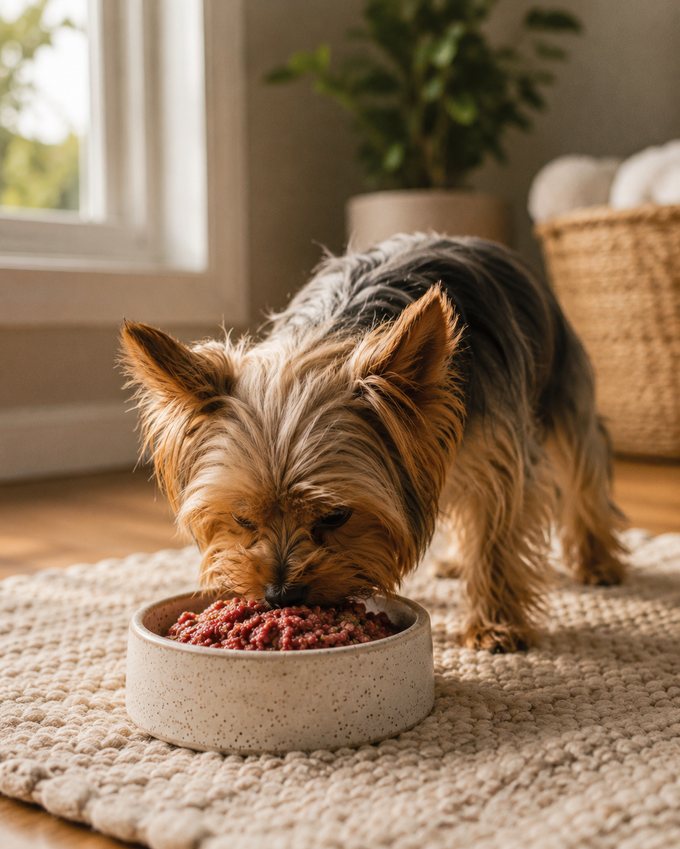
Toy breed dogs eat very little, which makes portioning and freezer management especially important. Here is what Edmonton toy breed owners need to know about raw feeding.
Toy breed dogs can thrive on raw food just as well as larger breeds, though their tiny size does create some practical differences worth knowing about.
What Is a Toy Breed?
Toy breeds are typically dogs weighing under 5kg. This includes breeds like Chihuahuas, Pomeranians, Yorkshire Terriers, Maltese, and Shih Tzus. Their small size means they eat very little relative to a standard 40LB box, which has implications for how you manage your supply.
How Much Does a Toy Dog Eat?
Using the standard guideline of 2 to 3 percent of body weight per day, a 3kg toy dog eats roughly 60 to 90 grams of raw food per day. A single 1LB tube containing approximately 450 grams would last this dog five to seven days after thawing.
At that rate, a 40LB box would last a toy breed dog the better part of a year. This makes freezer management and rotation important: practice first-in, first-out to ensure older stock is used before newer stock, and check that your freezer maintains a consistent temperature to preserve product quality over the longer storage period.
Portioning for Tiny Dogs
Accurate portioning matters more for very small dogs than for larger breeds because small errors in estimation represent a larger percentage of their total daily intake. A kitchen scale is a practical investment for toy breed owners feeding raw, allowing you to portion precisely rather than estimating by eye.
The Bundle Builder for Toy Breeds
Because toy breeds eat so little, variety can be introduced through the bundle builder by ordering small quantities of different proteins. A few tubes of chicken, a few of turkey, and a few of another protein gives months of variety without committing to full boxes of each.
Delivery Across Edmonton
Hound and Bone delivers to Edmonton and surrounding communities. Free delivery on orders over $120.
This article is for general information only and is not veterinary advice. Every dog is different — consult your veterinarian before making changes to your dog’s diet. Individual results may vary.